
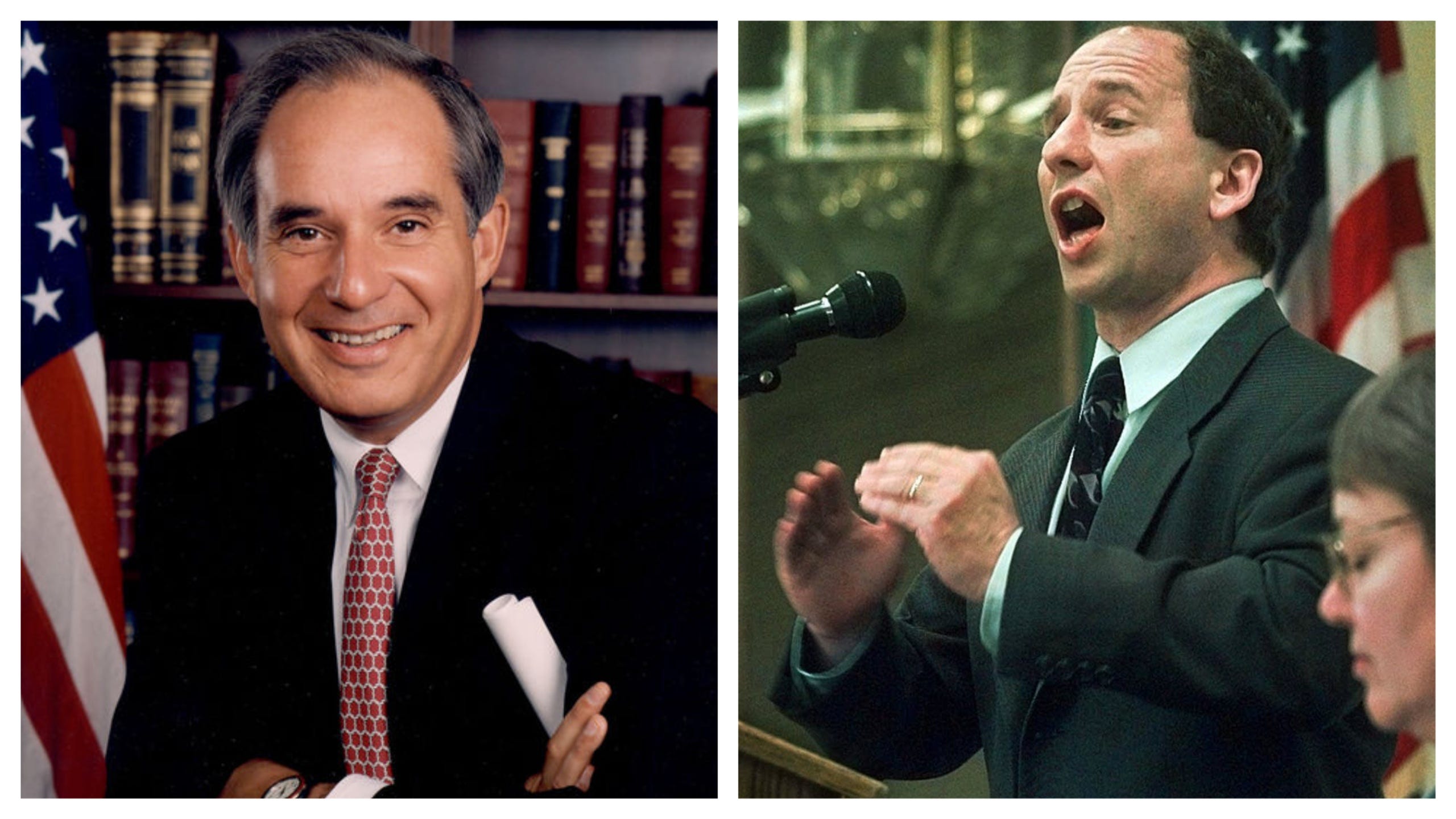
The resignation of Graham Platner and the unexpected death of Lindsey Graham has sent Maine Democrats and South Carolina Republicans scrambling to choose replacement Senate candidates for the midterms this fall. These shakeups may seem unprecedented, but they’re not. In the 2002 midterms, Democrats faced one candidate dropping from the ticket and another dying: New Jersey’s Bob Torricelli and Minnesota’s Paul Wellstone. One seat remained in Democratic hands; the other flipped to the Republicans.
The 2002 midterms were the first time since 1934 that an incumbent party gained seats in both bodies of Congress during their first midterms, as the Republicans won eight seats in the House and three in the Senate. This had much to do with the lingering shadow of 9/11. Following the attacks, George W. Bush’s approval ratings shot up from 51 to 87% as Americans of both parties looked to him for leadership (we had not yet seen the footage of him listening to elementary schoolers read The Pet Goat while he pondered what to do next.) Even my dad, a lifelong Democrat, said that if Bush got us through that crisis, he’d vote for him for re-election. (Narrator: “He didn’t.”)
Unfortunately for the world, Bush spent his newfound political capital on invading Iraq, which many Democrats voted for in the hopes that it would save their skins for re-election and potentially keep them as viable candidates for the presidency in 2004. One of them was New Jersey’s Bob Torricelli, who was first elected in 1996. He had pivoted to the right following Bush’s election (although he did not change parties), but some suspected that had as much to do with self-protection as political expediency.
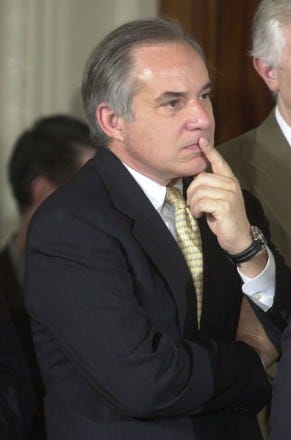
In 1999, the Justice Department launched an investigation into Torricelli’s financial misdeeds. The investigation, which lasted three years, did not result in any charges against Torricelli, but uncovered that, among other things, he had paid government salaries from congressional funds to several of his campaign aides and accepted illegal gifts and campaign contributions from a businessman named David Chang. Chang pled guilty and was sentenced to 18 months in prison in May 2002, six months before the midterms.
Although Torricelli was initially seen as a slight favorite to win re-election against Republican Doug Forrester, an Ethics Committee investigation into his misconduct that summer further tarnished his image. In a July 30 letter of admonition, the committee demanded that he return the gifts he had accepted from Chang, writing, “your actions and failure to act led to violations of Senate Rules…and created at least the appearance of impropriety.” Within 10 days, a Quinnipiac poll showed the race in a dead heat, and by September, the polls had Forrester ahead.
Torricelli withdrew from the ticket on September 30th. Within 24 hours, New Jersey Democrats had convinced former Senator Frank Lautenberg, who had retired in 2000, to throw his hat back in the ring. Lautenberg beat Forrester handily and remained in the Senate until his death in 2013. Ironically, one of the candidates New Jersey Democrats considered to replace Torricelli was Congressman Bob Menendez, who would become Senator in 2006…only to resign in 2024 after being found guilty for accepting illegal gifts, including gold bars. To quote South Park, “it’s a Jersey thing.”
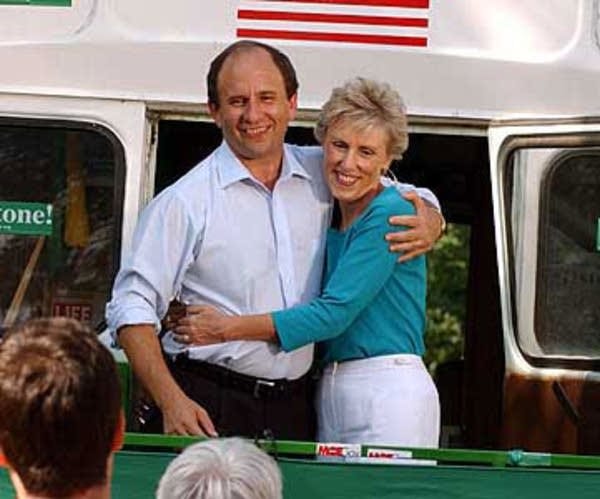
Plane crashes helped Republicans win the Senate in 2002, and this is not a 9/11 joke. In 2000, Missouri Governor Mel Carnahan, who was running for Senate against incumbent Republican John Ashcroft, died in a plane crash before the election and won. His wife Jean took his seat, triggering a special election two years later that she lost to Jim Talent. If Carnahan had lived, he would not have faced re-election until 2006, keeping the seat for the Democrats during this time. The second plane crash befell Minnesota’s Paul Wellstone.
Like his predecessor Hubert Humphrey, Wellstone was a happy warrior whose admirable stances on mental health, immigration, the Iraq War (he voted against it) and campaign finance led his colleague, Mark Dayton, to call him “the conscience of the Senate.” Still, Wellstone faced a tough battle for re-election. The third-party movement was strong in Minnesota, having elected Jesse Ventura Governor in 1998, and Wellstone faced challenges from Independence candidate Jim Moore and Green Party candidate Ray Tricomo in addition to Republican Norm Coleman that fall. The campaign was intensely negative on all sides, as Coleman called Wellstone “a joke” and Republicans put out an ad lying that Wellstone had voted for a bill about seaweed in Hawaii instead of supporting our nation’s defense (one which Wellstone’s son David confronted Republican Senator Bill Frist over at his father’s memorial.) By September of 2002, Wellstone seemed to be polling ahead of all of them to win with a plurality.
Then, on October 25, 2002, less than two weeks before the election, Wellstone, his wife, Sheila Ison, and his daughter Marcia were killed in a plane crash in Minnesota. The plane crash also took the lives of the two pilots and three Wellstone campaign aides. Former Vice President and Minnesota Senator Walter Mondale agreed to take his place on the ballot. Coleman pledged not to engage in negative campaigning against the Democrats – but that was a lie, as he had already dispatched former House Speaker Newt Gingrich to lie about Mondale’s record. What drove the Republican messaging at the end of the campaign, however, was Wellstone’s memorial on October 29.
Former Senator Al Franken, whose friendship with Wellstone inspired his eventual Senate campaign, wrote about the memorial in his 2003 book Lies and the Lying Liars Who Tell Them. The ceremony ended with a eulogy from Wellstone’s friend Rick Kahn, who turned to Wellstone’s Republican Senate colleagues in attendance and said, “can you not hear your friend calling you one last time to step forward on his behalf to keep his legacy alive and help us win this election for Paul Wellstone?” He ended his speech repeating the chant “we are gonna win this election for Paul Wellstone!” to the audience’s applause.
Within days, Republicans were airing clips of Kahn’s eulogy on TV to make it seem like the memorial was a political rally in disguise. “To people who only saw the ten-second clips,” Franken wrote, “it looked like Kahn and the crowd were just being foot-stompingly partisan—that Wellstone’s death was being used for political gain.” Republican Vin Weber said it most bluntly in an interview with the Minneapolis Star Tribune: “This was not a memorial to Paul Wellstone. This was a political event.” In addition, recounts Franken, Republicans ran with a lie that the Jumbotrons broadcasting the service to those in the back row had captions prompting them to applaud, when in reality they were just closed-captions picking up on the sounds of the audience after five seconds. That didn’t stop Rush Limbaugh, Tucker Carlson, and even then-unknown Kellyanne Conway from taking to the airwaves to denigrate the event. Franken interviewed many of them for his book, and learned that some, like Carlson, didn’t even watch the service. Despite their mendacity, Minnesotans elected Coleman by two points. In 2008, he lost re-election to Franken after a months-long recount.
“Sometimes I wonder why people do what they do for a living and how they feel about their work,” Franken wrote:
“What is it about their work that gives them a sense of a job well done? As a comedian, I know I’ve done my job when people laugh. David Wellstone builds low-cost housing for the poor. I think he feels a real sense of accomplishment when a family can move into its own home for the first time. What do you suppose gives Rush Limbaugh that warm glow?.... ‘Show me where the grief was’ [Limbaugh said.] It would be kind of funny if that’s what made Rush feel great, because it made me want to cry.”